
How VR can embed the health and safety standards of the future


Created in partnership with

Created in partnership with
You may also like
Popular resources
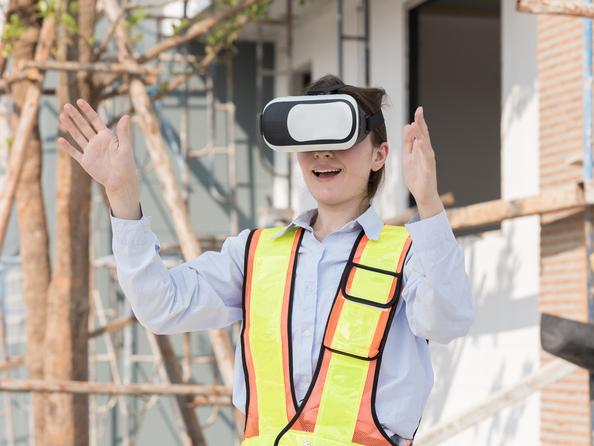
Picture a learning experience where students, without leaving their classroom, step virtually into the heart of a busy construction site.
Advances in virtual reality are turning this vision into reality, shifting occupational safety education from passive theory to immersive, hands-on learning. Once students put on the VR headsets and pick up controllers, they find themselves in a lifelike construction project process, where they might assess the dangers of lifting materials or respond to emergencies in confined spaces.
- Use XR to make invisible networks visible to students
- How to apply virtual reality to enhance learning experiences
- What virtual reality and AI can do for language learners
These scenarios, which would be impossible to recreate safely in a traditional classroom, become powerful learning experiences that highlight the consequences of neglecting proper safety measures. Through this approach, students not only develop technical skills but a deep appreciation for the importance of safety in their future professions.
In the end, human judgement shapes the outcome. Students make real-time decisions and, guided by their lecturers, reflect critically on their actions after each scenario. These debriefing sessions encourage discussion about what went well, what could be improved and how to approach similar situations differently next time, developing ethical awareness and leading to safer behaviour on real construction sites.
Applied to smart safety education
To keep learning dynamic and relevant, educators use a blend of approaches. Simulations place students in unpredictable situations, requiring quick thinking and adaptability skills essential for effective workplace safety.
Use role-play to deepen the experience. Assign students different responsibilities: one might act as a site supervisor, a safety officer or a new worker, helping them gain insight into different perspectives and pressures that shape safety decisions.
Introducing scenarios such as escaping from a cramped environment or experiencing a simulated fall from bamboo scaffolding provides vivid, memorable lessons that would be far too risky in the real world.
Connect theory to actual outcomes by grounding case studies in real incidents and prompt students to analyse, debate and propose alternative solutions.
Challenges and opportunities in the development of VR
Feedback from both students and lecturers highlights the effectiveness of VR-based safety training. Learners consistently report that the realism of the scenarios deepens their understanding of workplace risks and well-being, while lecturers notice increased engagement, motivation and a stronger readiness among students to apply their knowledge in real-life situations.
The result is not just better recall of safety procedures but greater confidence in confronting the unpredictable nature of construction sites.
Modern smart safety education goes beyond VR. Smart safety technology, for instance, combines wearable sensors, intelligent monitoring and data-driven analysis to identify hazards and prevent accidents. Early adoption of such systems, supported by insights from industry professionals, can significantly enhance safety performance and reduce accident rates, according to research.
However, even with sophisticated technology, human oversight remains essential, especially in high-risk situations where technology alone may not detect every potential problem or breach in protocol. Lecturers play a crucial role in guiding students through complex situations, ensuring technology serves as a tool rather than a replacement for critical thinking and ethical decision-making.
Despite these clear advantages, we still face challenges. The high cost of VR development and the continuous need for content updates can make it difficult for institutions to adopt and maintain such technologies on a large scale.
Additionally, even the most sophisticated simulations cannot fully replace hands-on experience with real tools and equipment. To address this, the most effective programmes combine immersive digital learning with traditional practical training, ensuring that students develop both the technical skills and adaptability necessary for safe and healthy work environments.
What we’ve learned
These innovations underscore the importance of continued investment in educational technology, strong partnerships between universities and industry, and regular evaluation of teaching effectiveness. By making learning immersive, interactive and reflective, smart technologies are shaping a new generation of professionals who will champion health, well-being and safety: the core values of the United Nations’ Sustainable Development Goal 3 (good health and well-being).
As the construction sector continues to evolve, smart technologies offer a path to sustainable development. With future professionals equipped to uphold these high standards, well-being can become a foundational element of the industry’s future.
Tsang Yiu-Fai is associate professor in the Department of Science and Environmental Studies and Kevin Chan Yan-Wai is a fourth-year student in the Doctor of Education Programme, both at The Education University of Hong Kong.
If you would like advice and insight from academics and university staff delivered direct to your inbox each week, .
